

News Summary
The St. Petersburg City Council is facing critical decisions regarding the future of two prominent murals. New regulations from Florida’s Department of Transportation could lead to their removal due to claims of safety hazards for motorists. The local community, along with artists, argues that these murals represent vital cultural expressions. Protests and petitions to save the artworks have surged, revealing a significant public sentiment against the enforced compliance. As the deadline looms, council members must balance state mandates with local cultural identity.
St. Petersburg City Council Faces Pressure to Remove Iconic Murals Due to New Florida Law
The future of two iconic murals in St. Petersburg is now in jeopardy as the City Council navigates new directives from state authorities. The “Black History Matters” mural located near the Woodson African American History Museum and a rainbow crosswalk on Central Avenue are under scrutiny due to a recent mandate from the Florida Department of Transportation (FDOT). This mandate requires municipalities to assess and potentially dismantle artwork along roadways that may conflict with federal traffic control regulations.
As part of this newly enforced guidance, FDOT Secretary Jared Perdue stated that artworks such as these could create safety hazards, deeming them distractions for motorists. Compliance is not optional; failure to adhere to the FDOT’s regulations could result in cities losing essential state funding. The law, which came into effect in July, is part of a broader initiative aimed at removing politically or ideologically driven displays from public spaces.
The U.S. Department of Transportation (U.S. DOT) has set an impending deadline for state compliance. Cities must submit lists of potentially noncompliant intersections by the end of August, with necessary adjustments required by September 2026. The new legislation has sparked significant backlash within St. Petersburg, where local community leaders and artists are actively opposing the removal of the murals, viewing them as vital expressions of inclusion and cultural heritage.
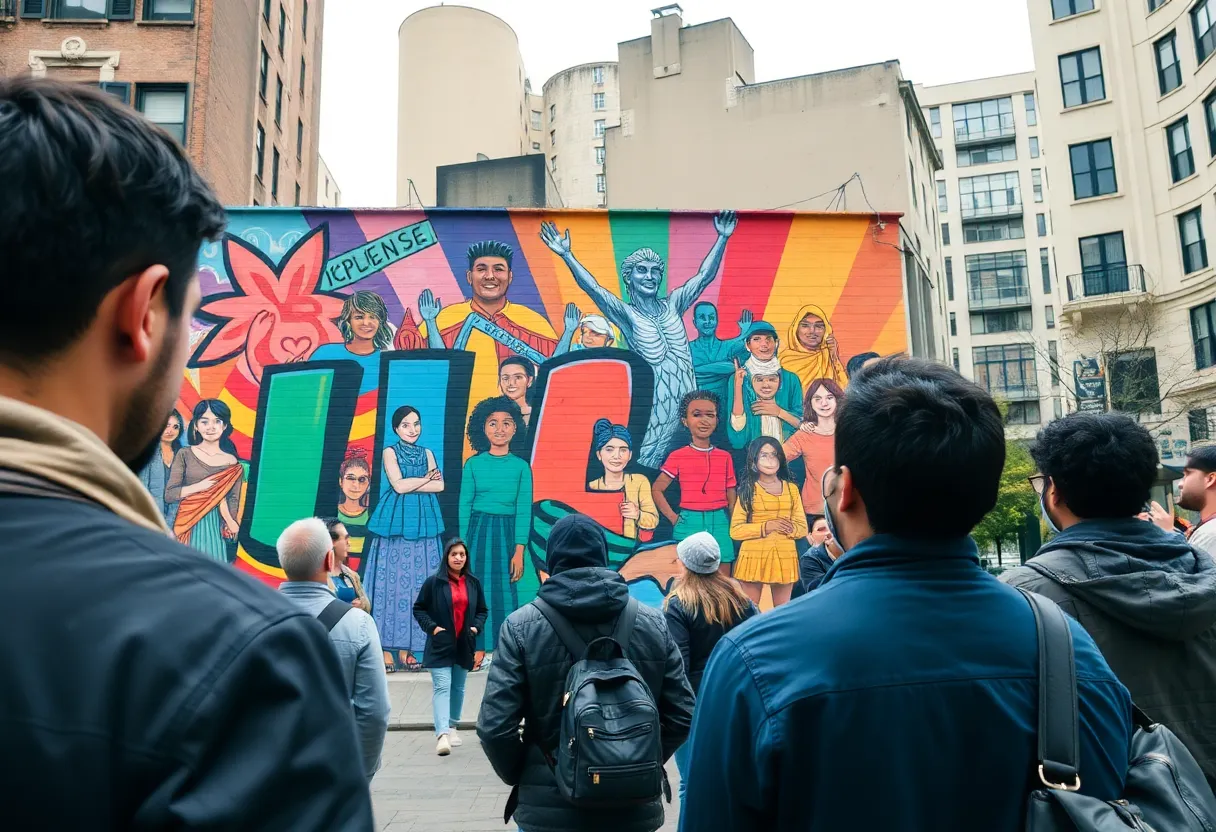
Artist James Freeman-Kitchens, who contributed to the “Black History Matters” mural, highlighted the significant meaning behind his artwork, arguing that it serves more than just an aesthetic purpose. Community members have rallied around the murals, with demonstrators expressing that these artworks symbolize the city’s diversity. A recent protest titled “Save Our Murals” took place outside City Hall, showcasing a strong public sentiment against the potential erasure of these murals.
In addition to community protests, an online petition on Change.org has gained traction, amassing nearly 2,200 signatures in support of preserving the artwork. Local leaders and advocates emphasize that the murals should be embraced as crucial components of St. Petersburg’s cultural landscape. Dr. Byron Green-Calisch, the president of St. Pete Pride, criticized the FDOT’s assertions regarding safety, contending that the loss of funding to under-resourced communities presents a far greater risk than any perceived threat posed by the murals.
In an effort to better understand the law, St. Pete Mayor Ken Welch is seeking clarity on possible exemptions that could allow for the continued presence of these murals. As local discussions continue, City Council members are grappling with the implications of the FDOT’s mandates while trying to navigate the intersection of state requirements and local cultural identity.
The FDOT’s memo outlining its directive indicated that the removal of non-compliant traffic control devices includes socially or politically themed street art. With the state’s deadline approaching on August 30 for cities to submit lists of road art that may not meet compliance, tensions are rising between state mandates and the values embraced by local communities.
According to research, artworks can enhance traffic safety by reducing accidents, counteracting claims made by state officials that art poses a distraction. Supporters argue that the two murals are not merely decorative but embody the community’s commitment to diversity, inclusion, and cultural expression. As the City Council prepares to address these critical issues, the outcome will have lasting implications for the future of St. Petersburg’s artistic landscape and its representation of diverse narratives.
Deeper Dive: News & Info About This Topic
HERE Resources
St. Petersburg Murals Threatened by State Directive
St. Petersburg Community Rallies to Protect Street Murals
St. Petersburg Faces Street Murals Removal Crisis
Explore Quirky Towns in Florida
Concerns Rise Over Florida’s New Law Impacting Decorative Crosswalks
Florida Law Threatens Decorative Crosswalks and Murals
St. Petersburg Invests $8 Billion in Urban Renewal and Resiliency
St. Petersburg Launches Month-Long PierFest Celebration
Exploring St. Petersburg: A Guide for Introverts
Florida Launches Operation Southern Slow Down for Road Safety
Additional Resources
- Fox 13 News: Future of St. Pete Street Murals
- Wikipedia: Street Art
- WFLA: Protest Against Removal of Road Art
- Google Search: St. Petersburg murals removal
- St. Pete Catalyst: State Bans Pavement Art
- Encyclopedia Britannica: Public Art
- Watermark: Petition Launched to Save Street Murals
- Google News: St. Pete murals protests